The method
The Anna Bogdanova method
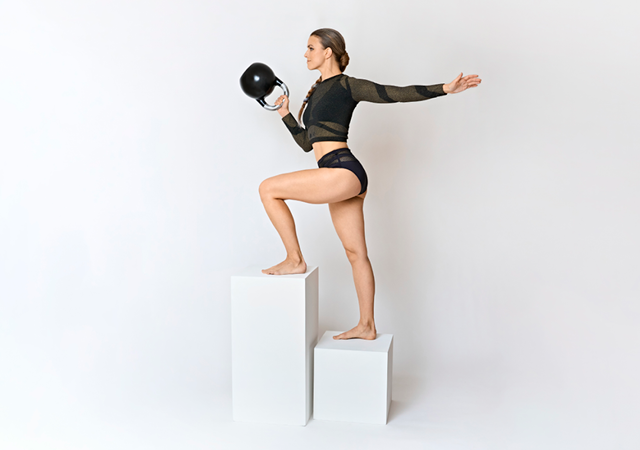
The Anna Bogdanova method is strength training that combines muscle training, bone building, sensory stimulation, metabolic optimisation and micro-training. It takes hormones and the nervous system into account, strengthens joints and ligaments and improves the elasticity of skin and connective tissue. The goal is maximum effect with minimum effort, at a pace where body, energy and mind can all keep up.
18 years
of experience in strength training for women
Almost 20,000
women have trained with Anna
4.7/5
on Trustpilot
5-15 min.
a day
The method
What is the Anna Bogdanova method?
It is not like any other training. The method brings together the most effective elements of disciplines as different as weightlifting, sensorimotor training, bodybuilding, breathing technique, exercise as medicine, modern pain science and functional training. It is packed into concentrated, fast-acting micro-training “vitamin pills” that fit into an ordinary day and last in the long run.
Nor does it fit the usual picture of strength training: as many reps as possible until the muscles burn, often with little effect and fading motivation. Anna Bogdanova's programmes focus on building up more than they break down, because you only benefit from the training you can recover from and keep doing all year round.
The method has been built, adjusted and refined on the experience of almost 20,000 women who have trained with Anna over 18 years.
How the programmes are built
The 9 elements of strength
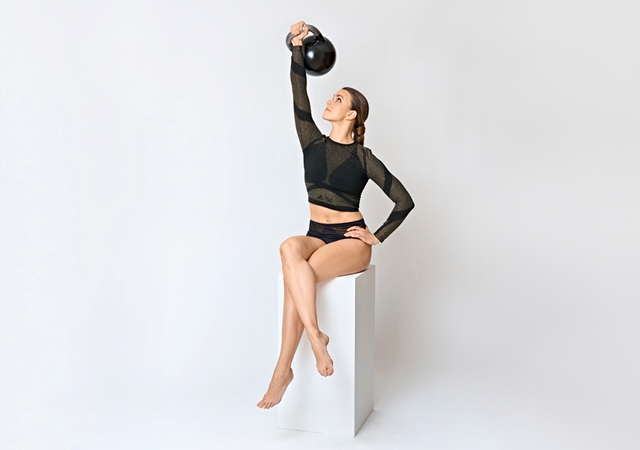
If strength were a dish, you would need 9 ingredients for the perfect recipe. Working with all 9 is crucial if your body is to train in a way that brings fast, effective results with only one hour of training a week.
All of Anna Bogdanova's programmes are built around the 9 elements of strength, from your nervous system to your muscles and metabolism. You get access to more of the strength you already have when you stimulate your nervous system, muscles and metabolism just enough to create change, without exhausting or overloading yourself.
Some programmes focus more on certain elements than others. You may not notice it at all, and you don't need to. But every exercise and every programme is planned around all 9 elements, so you get the greatest possible effect in the shortest possible time.
Sensing
A safe nervous system allows you to move your body more. By stimulating your senses in varied and nuanced ways, from the inside (your organs) and out (your skin), your brain gets a better sense of your body in the world.
Mobility
Your brain needs a complete map of your whole body. Mobility training updates the brain's GPS of every part of the body, giving you more freedom of movement.
Stability
Stability is your ability not to topple over when you meet resistance or load, for example from a kettlebell. Training stability gives you better joint and muscle coordination and stronger joints and ligaments.
Muscle contact
Many women find it hard to activate their muscles. So we build that contact, so you can tense and relax and get access to more strength.
Power
Once the contact is there, you want to recruit as many muscle fibres as possible at the same time. We turn up the signal with exercises that activate as much muscle as possible and also stimulate new bone formation.
Muscle building
We lose our most important youth resource, muscle mass, with age and in periods of stress and inactivity. Training to build muscle counteracts the drop in metabolism and blood sugar regulation and the rise in inflammation that many experience as they approach 40+.
Energy balance
You cannot train effectively or perform at your best in an energy deficit. The goal is energy balance, neither deficit nor surplus, which is why some of the full-body programmes include practical nutrition guidance.
Metabolism
Your muscles are also your metabolic factories. The programmes focus on directing energy into the muscles, where it is used to build you up and give your metabolism more gears.
Endurance
An important element of strength is moving the point where you get tired and stop. Then you can handle more intensity in your training and your life, recover faster and have energy for more.
Flows
Flows: wake up your muscles
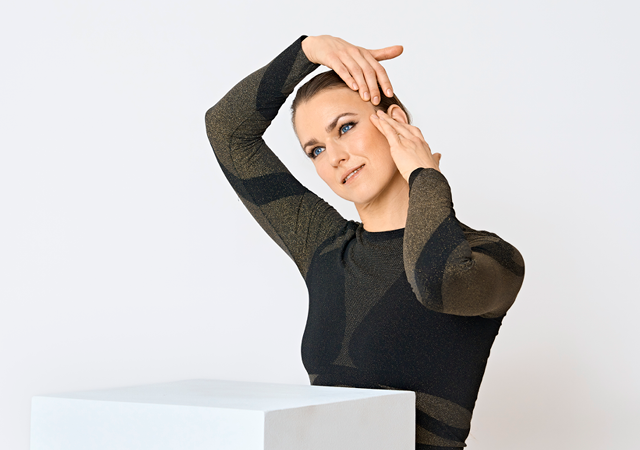
It doesn't matter which or how many strength exercises you do if your muscles are asleep. They can be, because we sit too much, do too much cardio or have been stressed for a long time. That is why most of the training includes flows: sensory exercises that wake up or restore contact with sleeping muscles.
The precondition for all the magic of strength training is that you can get your muscles (as many muscle fibres as possible) to contract. Many people find that hard, because the brain struggles to call up the muscles and put them to work.
If you are a beginner or have been inactive, there are often brakes on your muscles that your brain has applied, because it is looking after you and wants to make sure you don't get injured by lifting too much the wrong way. But your freedom of movement becomes limited, especially if you don't challenge your eyes and your balance every day, because your brain doesn't trust you.
If you are in pain, your brain over-interprets movement as pain, just to be on the safe side, so that you don't move into more pain. The result, however, is that you move less and more cautiously, which reduces your ability to coordinate and call on your muscle fibres. You forget how to contract them. The same happens if you train in a very one-sided way.
Long training sessions, especially cardio, combined with too little recovery and food, deplete the signalling substances that tell your muscles to contract. The same happens after long periods of stress. It feels hard to switch your body on and get going, and even ordinary everyday activities feel draining. That is why you will find flows, to varying degrees, in the different programmes.
With flows you can:
- get more out of your training, also when the focus is strength and toning
- improve your body awareness and feel safer in movement
- gain more freedom of movement and fewer brakes on your muscles
- get significantly more out of your training, in less time
Micro-training
Micro-training: maximum effect in minimum time
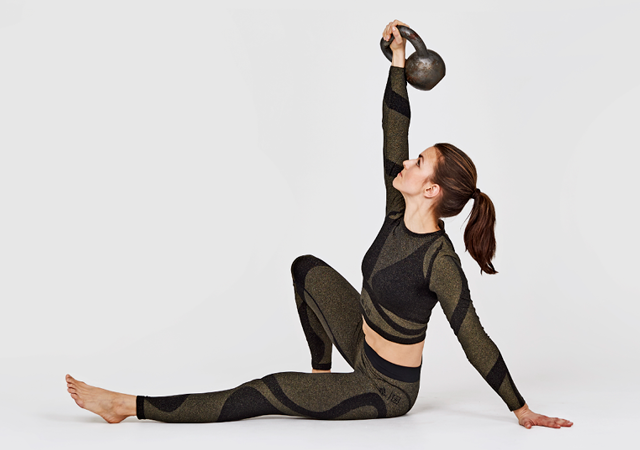
Can you get results in just 5-15 minutes a day?
A fair question. If you don't have contact with your muscles and train them strategically, you won't get the effect you want. Anna Bogdanova's micro-training is small, well-planned pushes towards more strength, resilience and energy, programmed for the long run because you can keep doing it.
The key to success with micro-training is frequency and systematic progression.
Frequency matters more than duration or intensity. You get better at something faster when you do it often and while you are fresh and focused, than when you do it rarely and to exhaustion. Micro-training makes it easy to train regularly, and it is better to train 5 minutes every day than 1 hour once a week.
Steady progress is not only about how each session is put together, but also about the strategic plan behind the exercises. You start conservatively, so there is room to improve from week to week and you can adjust the training to how you feel on the day. That creates continuous progress in strength and body composition without running yourself into the ground every time. Behind effective micro-training lies a bigger strategic programme, so you don't end up with sporadic workouts that only give sporadic results.
Micro-training is also designed to nudge physiological and neurological circuits that give your metabolism more gears and increase your desire and energy to move more in everyday life. With micro-training you get:
- better blood sugar regulation and insulin sensitivity
- more energy and mental focus
- greater well-being
- better oxygen uptake and lactic acid tolerance (if the intensity is high enough)
- better body awareness and freedom of movement
The tool
Kettlebells as the key tool

There is good reason why kettlebells are the cornerstone of the Anna Bogdanova method. With a kettlebell you work many muscles in a short time, so you can train strength, fitness and mobility in your whole body at once. There are also programmes where you train with your own body weight only, and you can easily start without a weight or with a dumbbell.
We love training with kettlebells because:
- Fast, explosive movements and slow, powerful movements make your nervous system send a stronger signal to your muscles, so you activate a larger share of the fast-twitch muscle fibres, which are the quickest to create a visible change in your body shape.
- The explosive kettlebell exercises can do some of the same as throwing, sprinting and jumping, but without landings and with less technique, and therefore with less risk of injury.
- The movement of the bell creates a shifting centre of gravity, which asks more of your body's stability. You have to brace your core more to keep an upright posture and resist rotation around your spine.
- Many beginners find they can lift heavier than they expected, because the speed of the movement makes the load feel manageable.
- The many repetitions of kettlebell lifts strengthen the tendons and ligaments in your wrists, elbows, shoulders and back.
- It helps prevent shoulder and neck pain. A strong grip is associated with better health in later life.
- Correct kettlebell training is driven largely by the hips and back and challenges your grip. You learn to use your muscles more effectively and help prevent osteoporosis, which in women most often shows up in the hips, lower back and wrists.
- It helps prevent knee and cruciate ligament injuries. If the front of your thighs is stronger than the back, kettlebell training teaches you to activate the whole back of your body, which gives you more stable knees.
- It creates focus, presence and body awareness, because you train coordination, stability and power at the same time. The effect is immediate clarity and sharper attention.
FAQ
Frequently asked questions
What is the Anna Bogdanova method?
The Anna Bogdanova method is strength training that combines muscle training, bone building, sensory stimulation, metabolic optimisation and micro-training, and takes hormones and the nervous system into account. All programmes are built around 9 elements of strength, from the nervous system to muscles and metabolism.
Can you get results in just 5-15 minutes a day?
Yes, when the training is strategically programmed. The key is frequency and systematic progression: it is better to train 5 minutes every day than 1 hour once a week, because you get better faster at something you do often and while you are fresh.
Why does the method use kettlebells?
With a kettlebell you work many muscles in a short time and train strength, fitness and mobility at once. The bell's shifting centre of gravity strengthens your core, and the exercises strengthen your grip, tendons and ligaments. You can also start without a weight or with a dumbbell.
What are flows?
Flows are sensory exercises that wake up or restore contact with muscles that are asleep, for example after a lot of sitting, a lot of cardio or long periods of stress. They help you get more out of your strength training.
Coming in English
Be the first to train with Anna in English
Leave your email and we will let you know when the English membership opens. No spam, and you can unsubscribe at any time.